
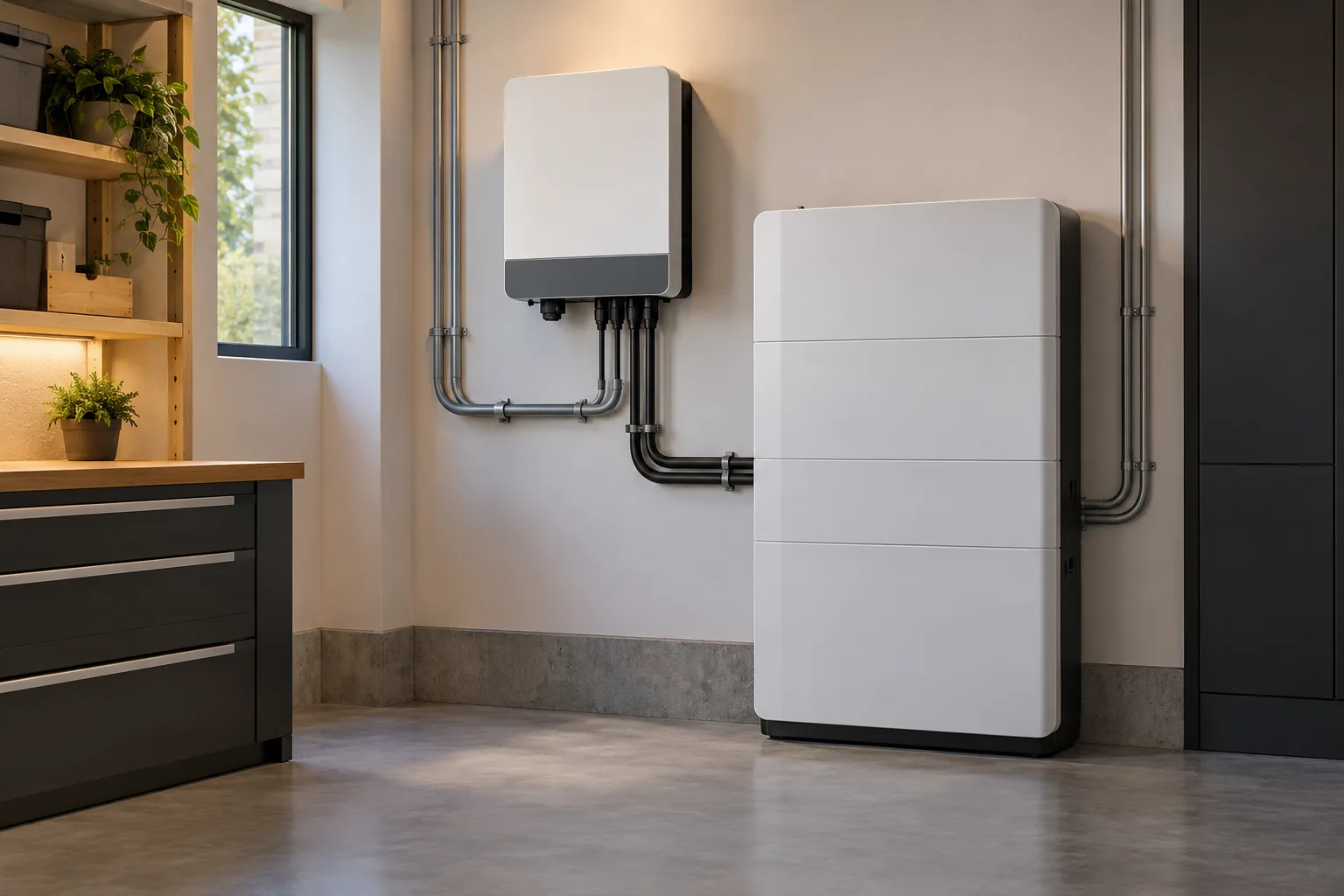

Tier 1 photovoltaic arrays sized to your measured consumption, mounted for maximum yield and long service life.
Array size is set by your actual load profile rather than a generic package, so you generate what you use and store the rest.
Anyone can install an inverter. The difference is whether the system is measured, automated and watched — and whether anyone is accountable for keeping it performing three years from now.
Generation, storage and the household load, balanced moment to moment by a hybrid inverter — with the grid as a fallback rather than the default.
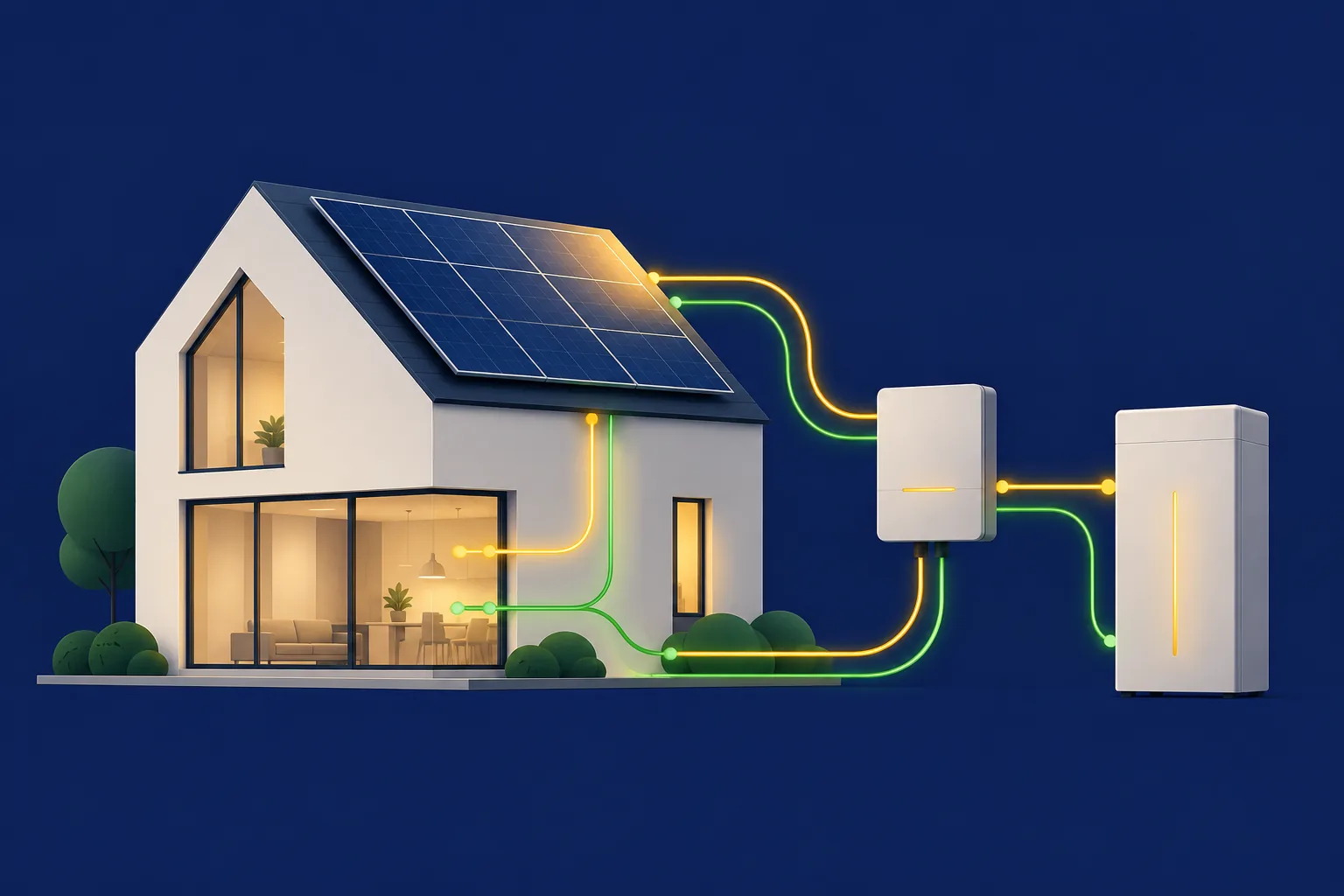
Solar array
Generation sized to your measured consumption.
Hybrid inverter
Decides what powers the house, what charges, what is drawn.
Battery reserve
Carries the essential circuits through an outage.
The home
Lighting, hot water, cooking and comfort, running on its own supply.
Open the app and see what is generating, what is stored, what the household is using and what it is costing you. No spreadsheets, no waiting for a bill to arrive to find out how last month went.
The dashboard shows live state rather than sample figures: your generation, storage and water levels are yours, not an illustration.

The equipment is only half of it. The other half is knowing what it is doing, and having it act on your behalf.
Granular measurement of generation and consumption.
Continuous health checks across the whole system.
Geyser, lighting and load control that respond automatically.
Rules and scenes that remove daily decisions.
Every utility, live, on one screen.
Patterns that reveal where cost is really going.
Consumption and storage levels at a glance.
Your whole home, from anywhere.
Told before something becomes a problem.
Continuous monitoring runs across the installed system. Performance is compared against expectations, and when something drifts, we see it early. Most issues are addressed before they would ever have reached you.
Load shifting, geyser scheduling and scene control all act on their own. You set the intent once; the system handles the rest — moving heavy loads into the hours when your own generation is at its highest.
Select a component to understand what it does, how it is sized and why it matters to your household.
Tier 1 photovoltaic arrays sized to your measured consumption, mounted for maximum yield and long service life.
Array size is set by your actual load profile rather than a generic package, so you generate what you use and store the rest.
Lithium storage sized to carry your essential circuits through an outage.
Capacity is calculated against the circuits you want to keep alive — not the number of hours a brochure promises.
The intelligence that balances generation, storage, grid and load.
Hybrid inverters decide, moment to moment, what powers the house, what charges the battery and what is drawn from the grid.
Water heating that uses a fraction of the energy of a resistive element.
By moving heat rather than creating it, a heat pump removes one of the largest and most predictable loads in a home.
Backup storage, automated pressure management and filtration.
Storage capacity and pump duty are matched to your household demand so pressure holds through an interruption.
Geyser control, load management and automation that act on their own.
Devices shift heavy loads to the hours when your own generation is highest, cutting what you buy from the grid.
Measurement of generation, consumption and export at circuit level.
You cannot optimise what you cannot measure. Metering turns a utility bill into an actionable picture.
A single live view of the whole system, with alerts before failures.
Continuous monitoring means faults are seen by us before they become your inconvenience.
A complimentary assessment establishes exactly which smart capabilities would change your household's cost and reliability — and which would not be worth paying for.